Graphene-based Biosensors for the Early Detection of Alzheimer’s Disease
When I first saw my great-uncle, he bear-hugged me. But he’d never utter my name again.
In the summer of 2015, I visited Yingshan, my parents’ hometown in Central China. My great-uncle had Alzheimer’s Disease, driven by the buildup of Amyloid-Beta proteins in and around brain cells, occurring silently in his body for decades.
I was startled, even unsettled, by the idea of an invisible disease; lying low and only appearing when it’s too late to treat effectively. What were we missing simply because we knew not when to look?
Could we design a biosensor that detects the disease earlier, non-invasively, and in real time?
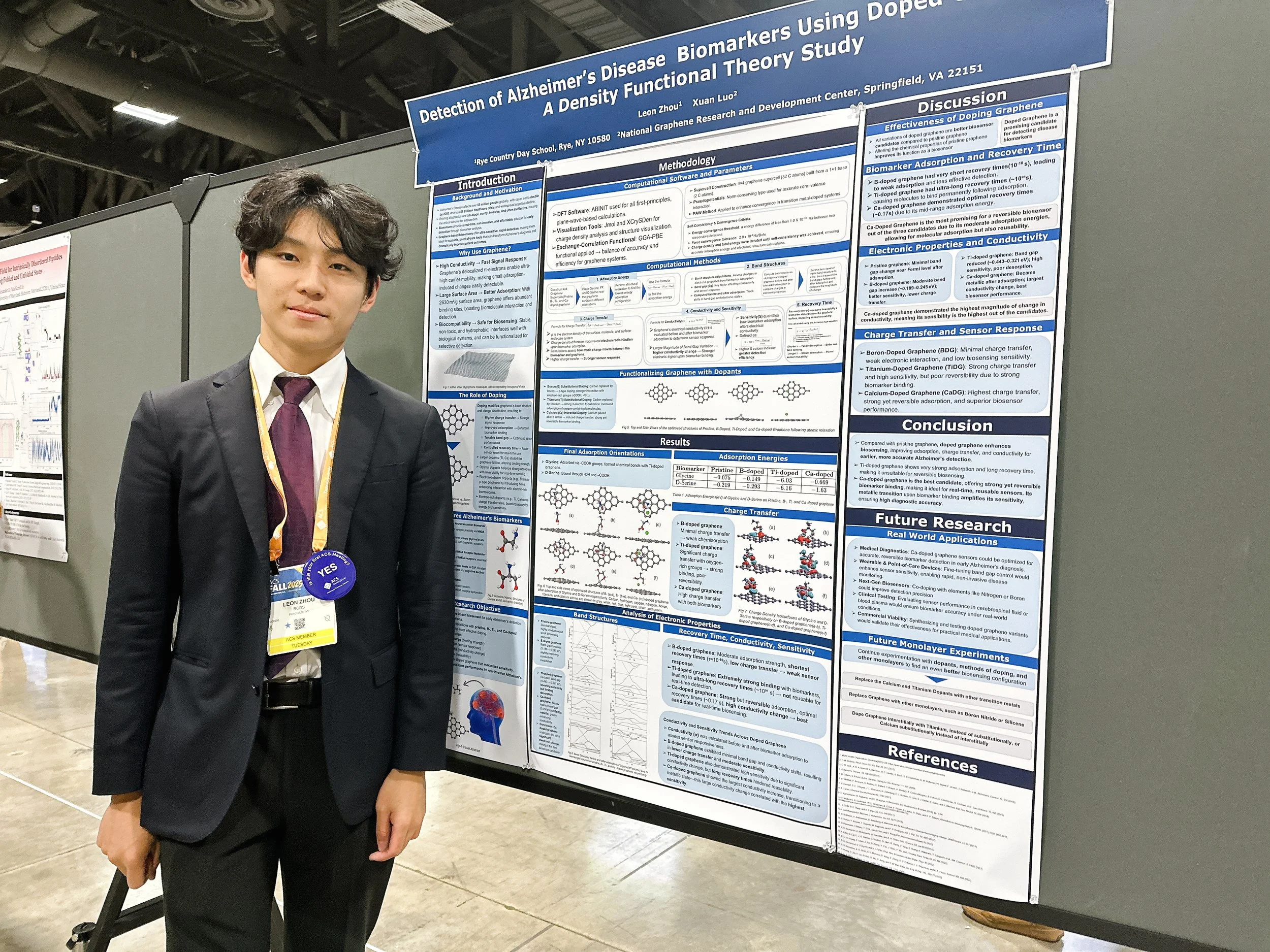
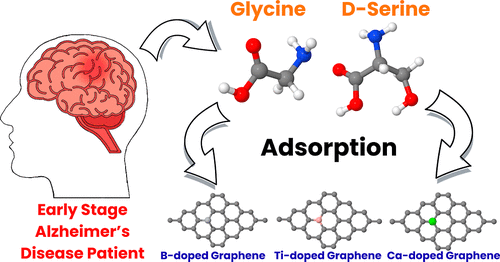
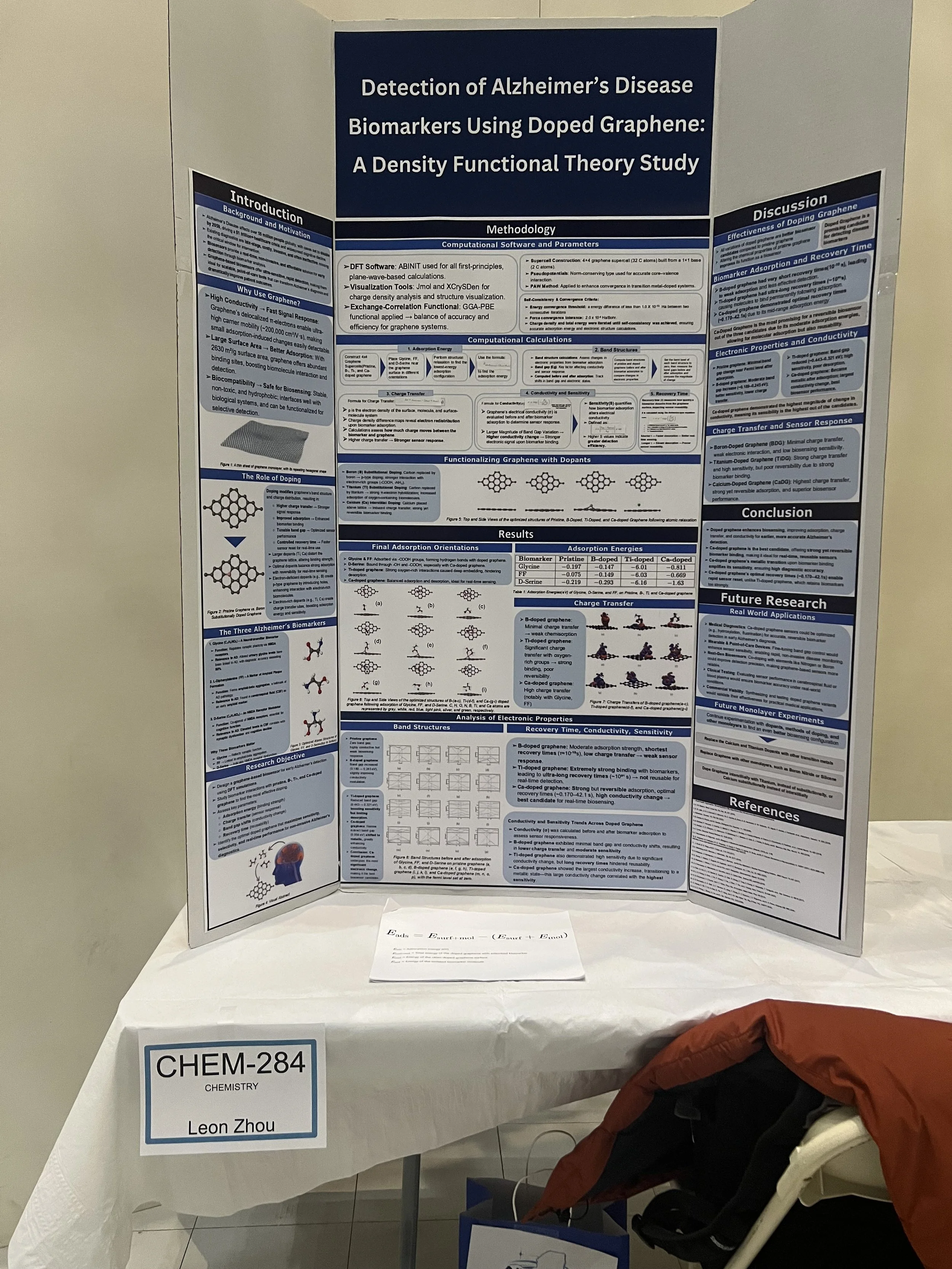
Using density functional theory (DFT) simulations, I investigated how different versions of graphene—pristine and doped with boron, titanium, or calcium—interact with glycine and D-serine, two emerging biomarkers elevated in early-stage Alzheimer's disease. Using computational tools such as ABINIT and advanced techniques, including charge-density mapping and band-structure analysis, I calculated adsorption energies, electronic properties, and recovery times to determine which material would perform best as a biosensor.
This work, conducted under the mentorship of Dr. Xuan Luo at the National Graphene Research and Development Center, was published in Vol 7, Issue 44 of ACS Omega, a peer-reviewed journal of the American Chemical Society.
Full Paper Access
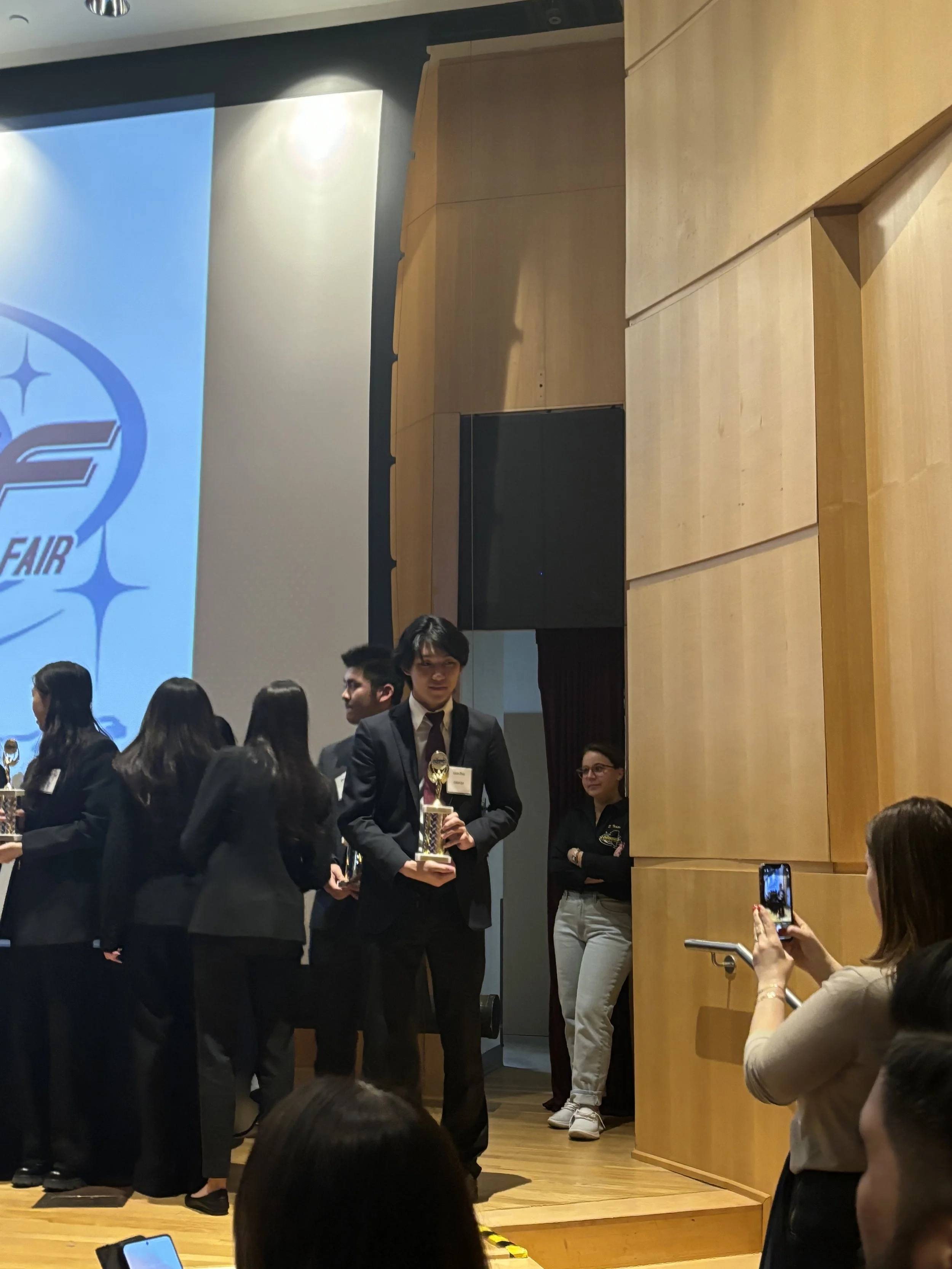
New York State Science and Engineering Fair(NYSSEF)
I presented this research at the New York State Science & Engineering Fair (NYSSEF), one of the most competitive student research competitions in the state. Competing against hundreds of projects across all scientific disciplines, my work on calcium-doped graphene biosensors for Alzheimer's detection earned 3rd place in the Physical Sciences category. The experience pushed me to communicate complex computational chemistry to judges from diverse scientific backgrounds and defend my methodology and conclusions under rigorous questioning.
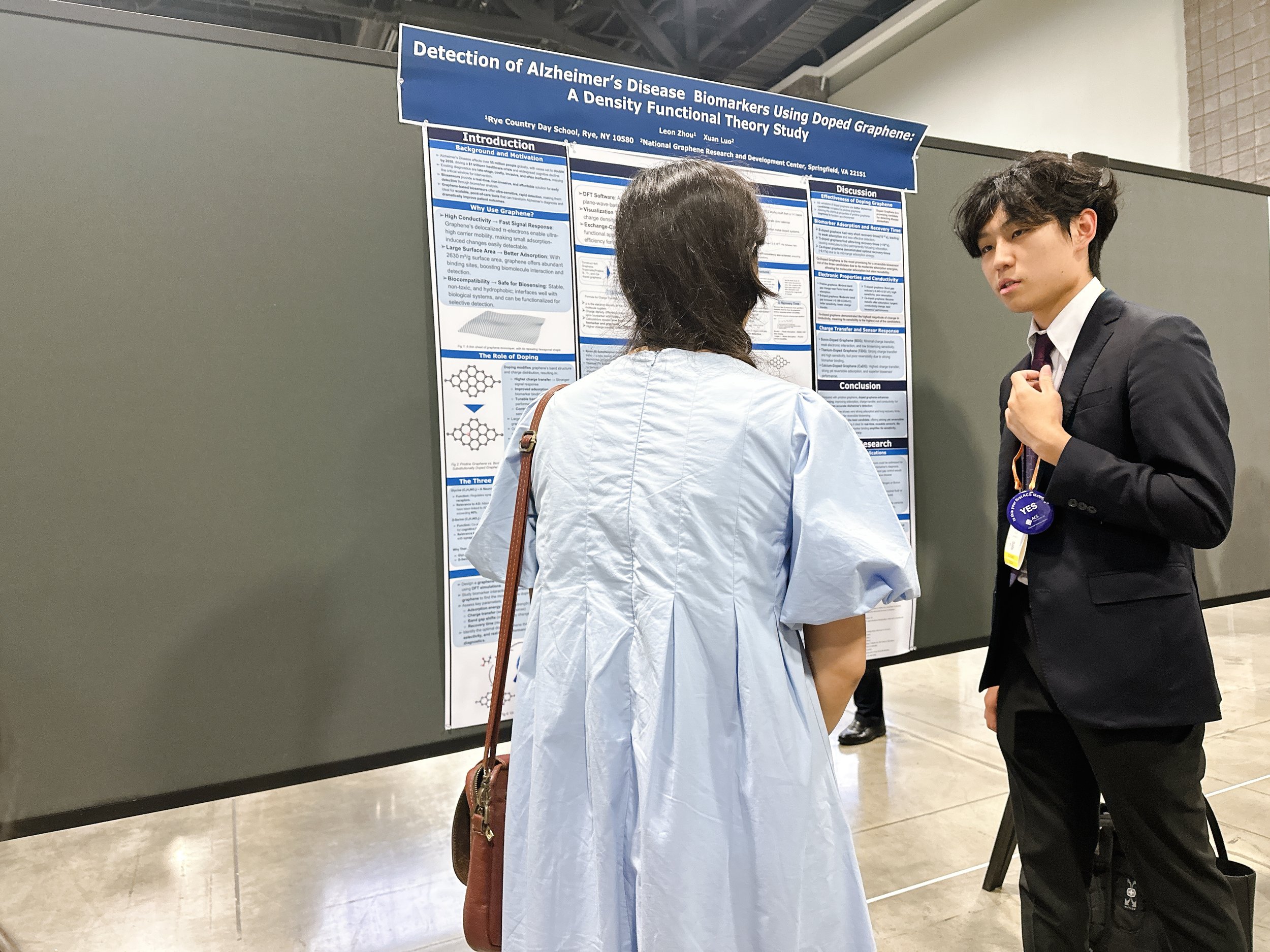
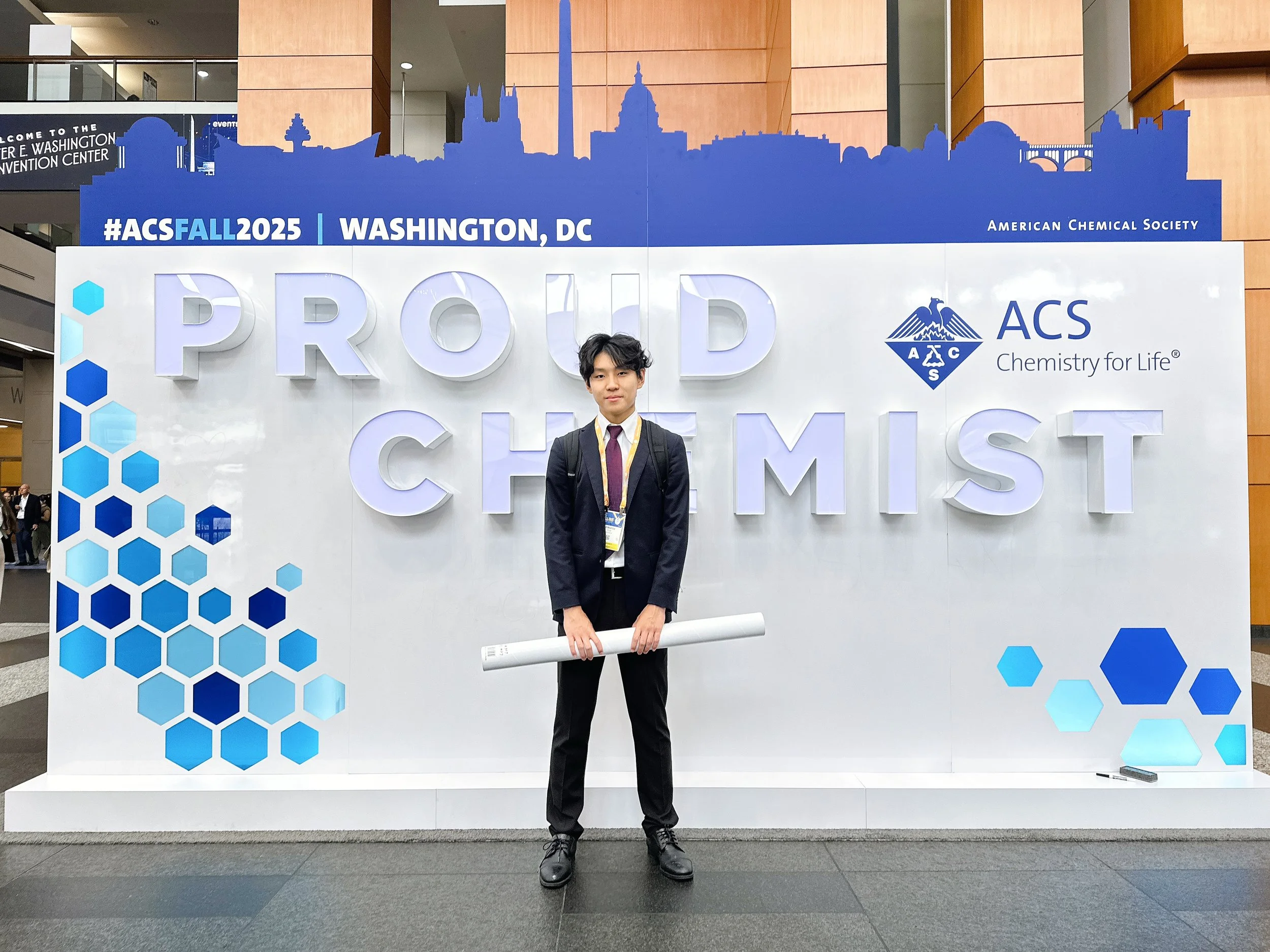
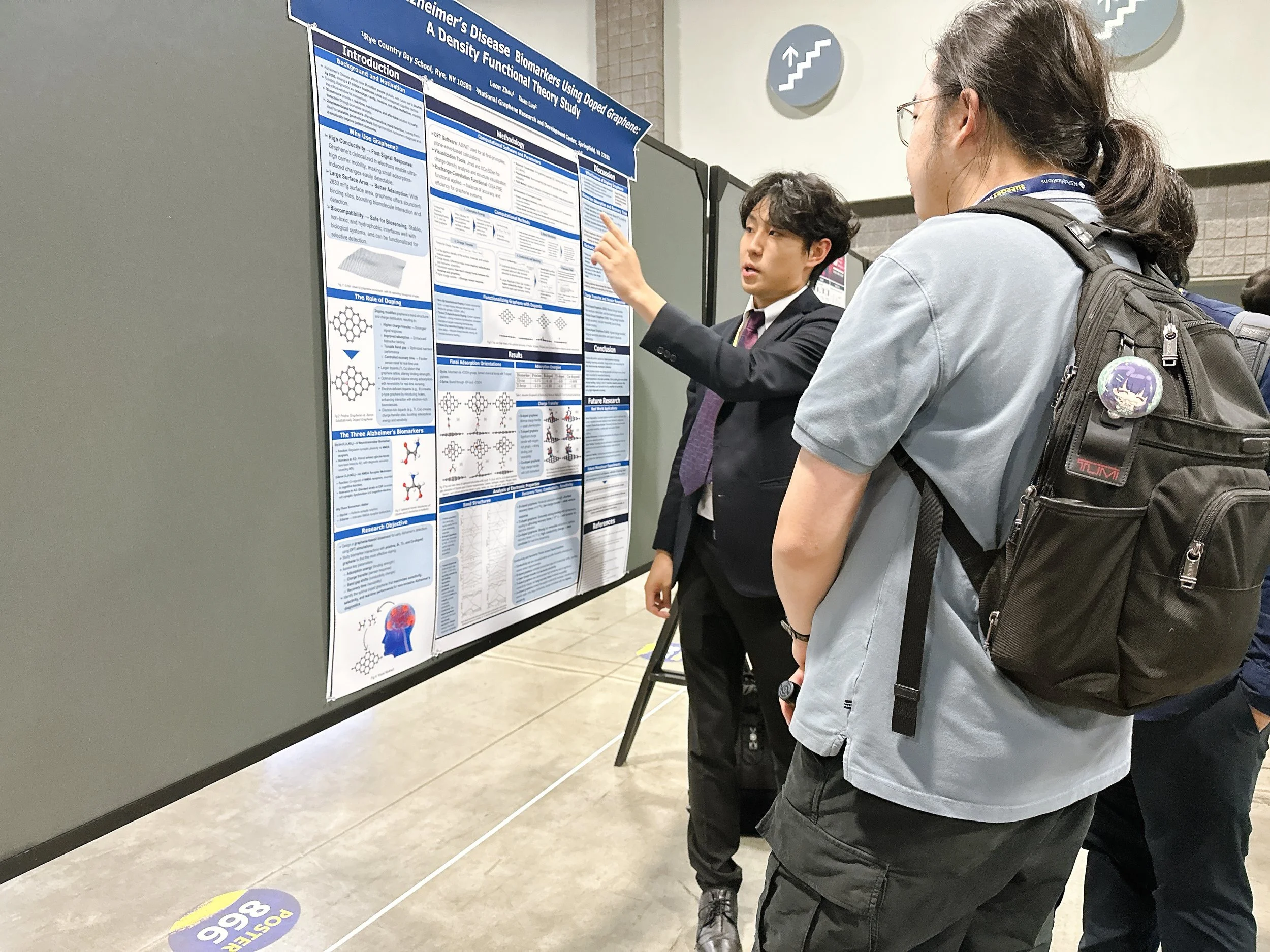
Presentation at the American Chemical Society’s 2025 Fall Meeting
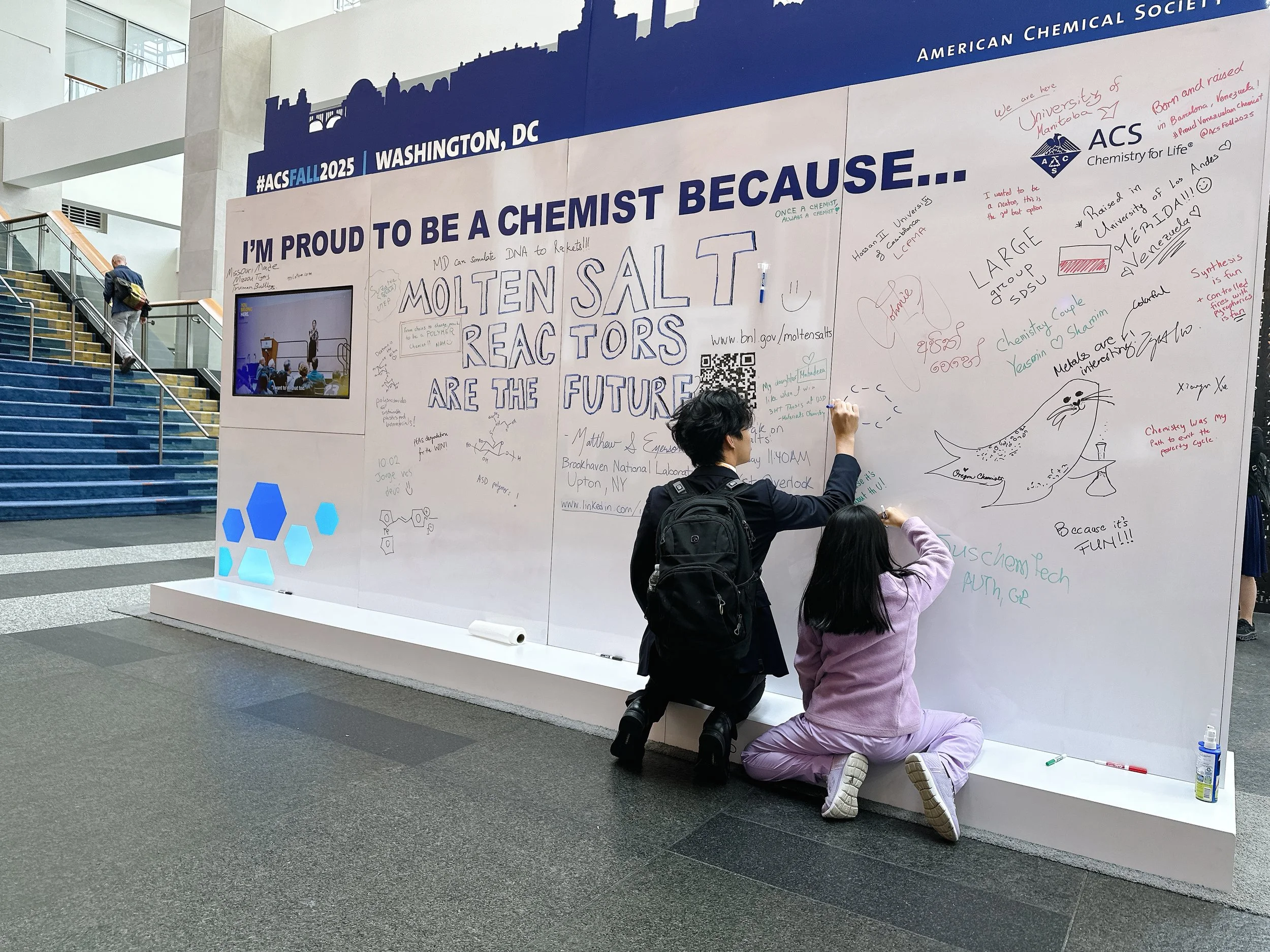
I submitted an abstract of this research to the American Chemical Society (ACS) Fall 2025 Meeting in June, and it was accepted for presentation at the conference held August 23-27.
The ACS Fall Meeting is one of the largest gatherings of chemists and chemical engineers worldwide, bringing together researchers from academia, industry, and national laboratories. Presenting my work on doped graphene biosensors alongside graduate students, industry professionals, and college professors gave me the opportunity to engage with experts in computational chemistry, nanomaterials, and biomedical applications, and to receive feedback on my project.
Picture Gallery